

Texas Pool Leak Solutions repairs pool plaster leaks across Dallas with color-matched patches that blend seamlessly. 30+ years experience. In-house crew. Same-day service available.
Plaster damage is the most common visible defect on Dallas pools. Crazing, spalling, and hairline cracks appear on most pools older than 10 years. Some plaster damage is cosmetic. Some plaster damage becomes an active leak path that drains hundreds of gallons a week. Distinguishing between the two requires professional inspection.
Texas Pool Leak Solutions repairs pool plaster leaks throughout Dallas. Our team has 30+ years of combined experience with residential pool plaster. We identify which plaster defects are active leaks. We repair those leaks with color-matched patches. We complete every repair in-house.
Dallas homeowners call us when their plaster shows visible damage. Dallas homeowners call us when their pool loses water and they suspect a plaster leak. Dallas homeowners call us when they want targeted plaster repair without a full resurface.
Call (469) 888-9561 now for Dallas pool plaster patch repair.
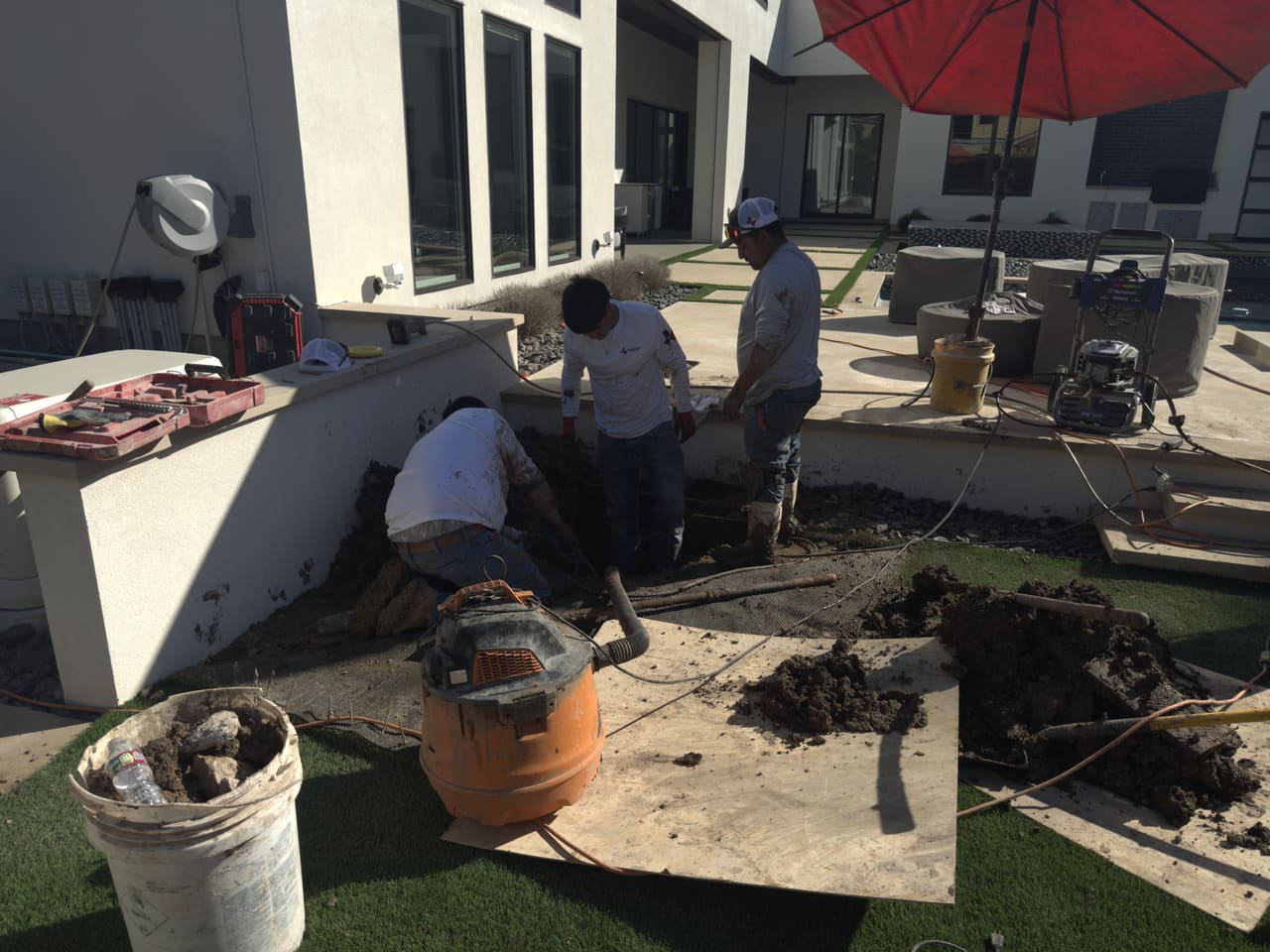
Pool plaster fails in specific patterns. Our team identifies and repairs every common type of plaster damage on Dallas residential pools.
Hairline Plaster Cracks
Hairline cracks form as plaster ages and pool shells shift. Some hairline cracks stay cosmetic. Others extend into the gunite and become leak paths. Dye testing confirms which cracks are active leaks. We repair active cracks with port-and-inject epoxy or targeted plaster patches.
Structural Plaster Cracks
Structural cracks are wider, deeper, and often visible without close inspection. These cracks penetrate the gunite substrate. Structural cracks require staple repair or full crack injection before plaster patching. Our team completes both the structural repair and the surface patch.
Plaster Spalling
Spalling occurs when the plaster surface flakes away from the gunite substrate. Chemical imbalance, calcium buildup, or aging accelerate spalling. Spalled areas expose gunite to water infiltration. We remove the failed plaster, prep the substrate, and apply a color-matched patch.
Plaster Delamination
Delamination separates plaster from the underlying gunite. Delaminated sections sound hollow when tapped. These sections often crack and fail as leak paths. Our team removes delaminated plaster and re-bonds the patch to the substrate.
Chemical Etching and Erosion
Aggressive water chemistry etches plaster over time. Etched areas develop micro-cracks that expand into leak paths. Repair combines plaster patching with water chemistry correction to prevent recurrence.
Freeze Damage
DFW hard freezes damage plaster at the waterline and above. Freeze cracks appear as horizontal fractures along the tile line. We patch freeze damage with color-matched plaster and address any underlying tile grout failures.
Get your Dallas pool plaster repaired. Call (469) 888-9561 today.
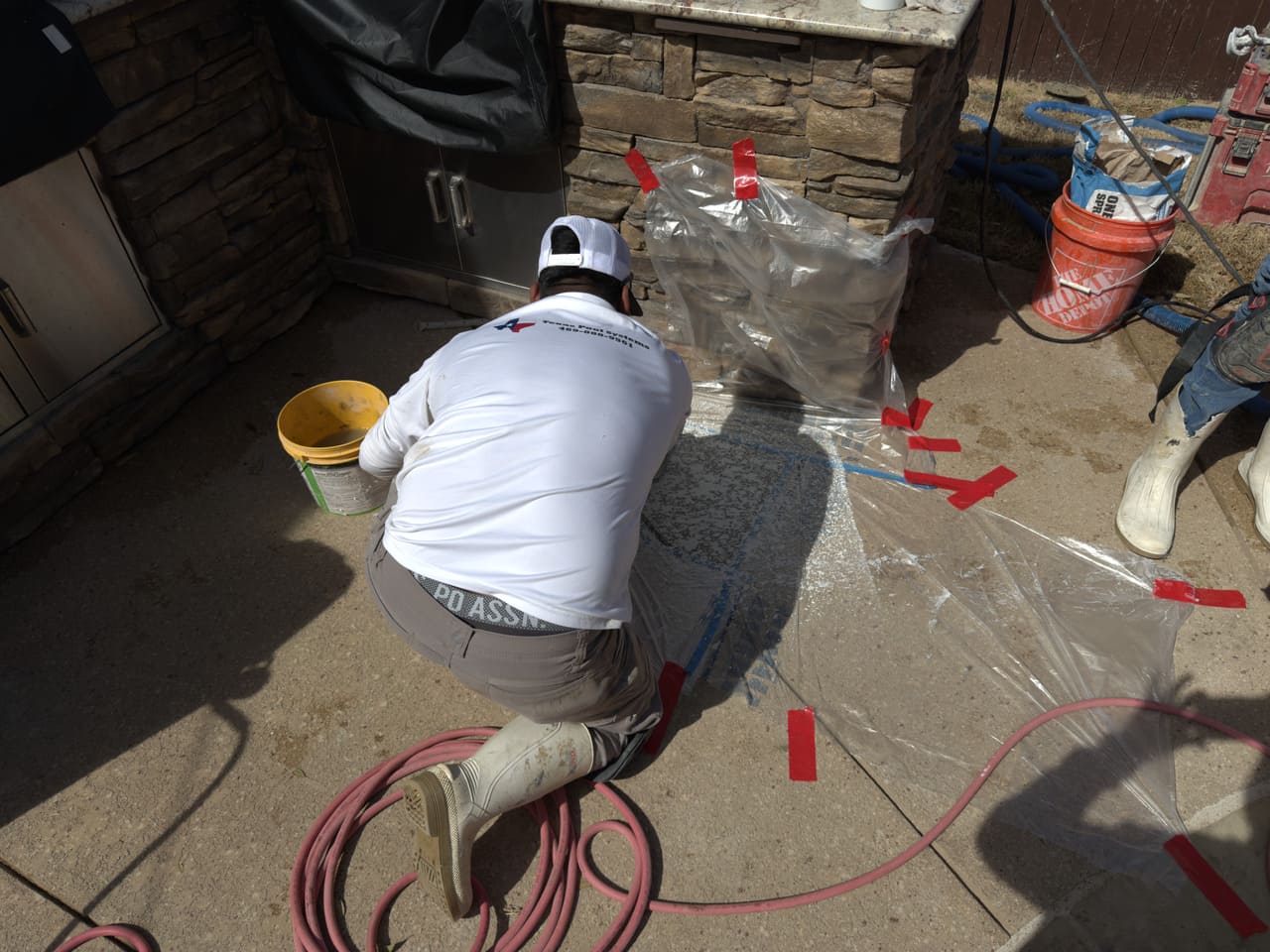
Our team follows the same reliable process on every Dallas plaster repair. This process delivers a lasting patch that blends visually with your existing pool finish.
Color-matched patching blends with existing plaster. Complete invisibility depends on plaster age, current color, and prior patch history. We give honest expectations before starting the repair.
Schedule your Dallas plaster patch repair. Call (469) 888-9561.
Plaster patch repair costs a fraction of full pool resurfacing. Patching is the right choice in specific situations.
Isolated damage on newer plaster. Pools with plaster under 8 years old typically show localized damage rather than system-wide failure. Patching restores structural integrity while preserving the rest of the plaster surface. Full resurfacing is unnecessary at this age.
Freeze damage with intact surrounding plaster. Winter freeze damage often affects only the tile line area. If the rest of the plaster is sound, patching the affected section is more cost-effective than full resurfacing.
Structural cracks without widespread crazing. A single structural crack requires targeted repair, not a full resurface. Injection and patching restore the leak-free condition without disturbing sound plaster.
Temporary bridge to a future resurface. Some homeowners plan a future resurface but need an immediate leak-stopping repair. Patching provides that bridge without wasting money on a soon-to-be-replaced surface.
Older Dallas pools may benefit from full resurfacing instead. Pools older than 15 years with widespread crazing, multiple leak points, or extensive spalling often justify a full resurface. We give an honest assessment during the inspection. Repair sometimes is the wrong answer. Full resurface sometimes is right.
Not sure whether to patch or resurface? Call (469) 888-9561 for an honest assessment.
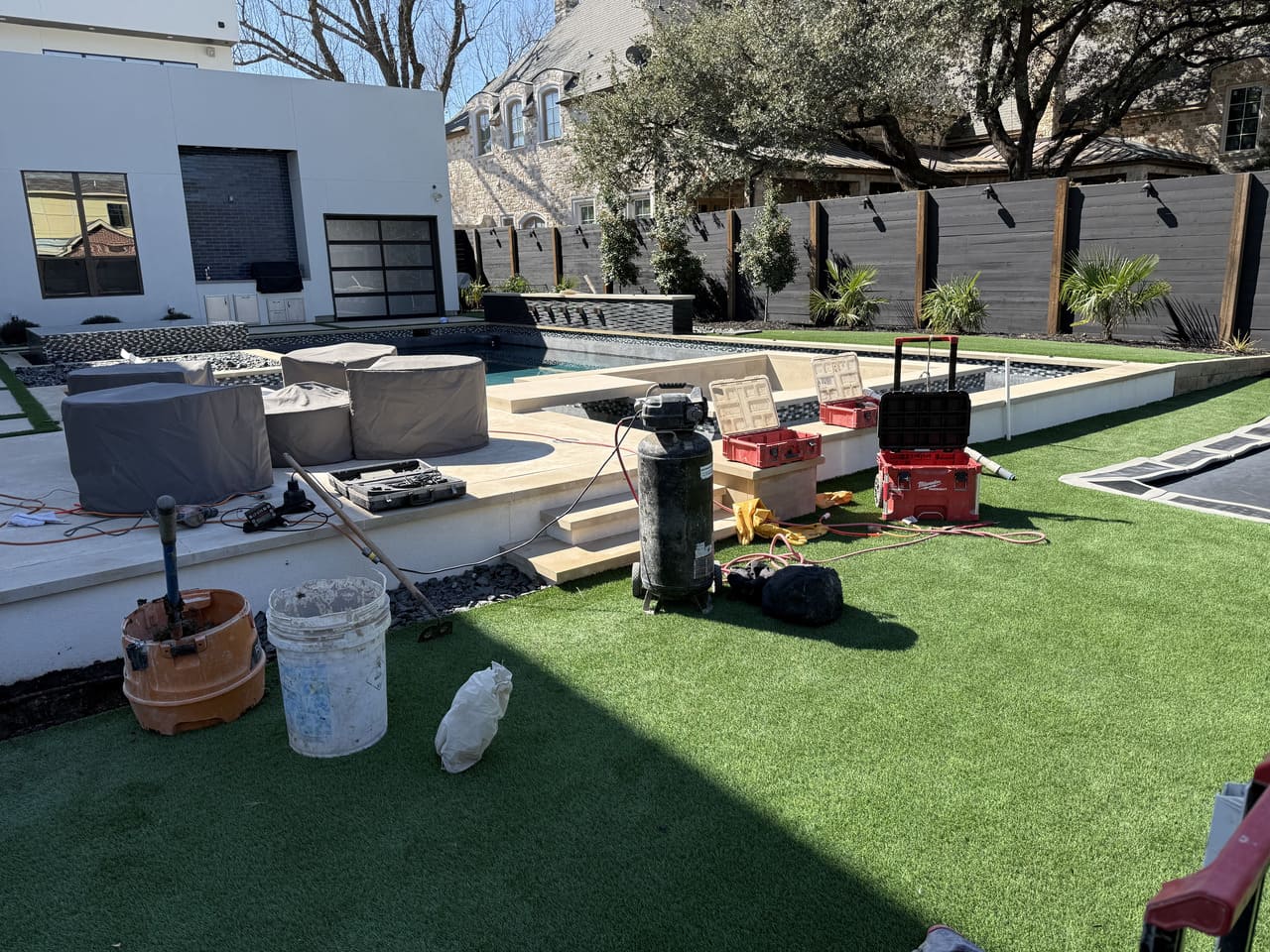
Dallas pool plaster fails from five specific causes. Each cause traces to environmental or maintenance factors common in DFW.
Municipal water in Dallas is moderately hard. High calcium levels and pH fluctuations accelerate plaster wear. Chemical imbalance over years produces crazing, spalling, and etching.
Expansive clay soil across Dallas moves seasonally. Shell movement stresses the bond between plaster and gunite. Cracks develop at structural stress points, especially in the deep end and around fittings.
Winter freezes crack plaster at the waterline and just above. Ice expansion breaks plaster bonds and creates entry points for water infiltration.
Plaster ages predictably. Newer plaster flexes with shell movement. Older plaster becomes brittle. Brittle plaster cracks under the same shell movement it once tolerated.
Repeated shock treatments and undissolved chlorine tablets etch plaster directly. Etched surfaces develop micro-cracks that widen over years into visible failures.
Recognize damage on your Dallas pool plaster? Call (469) 888-9561 today.
Texas Pool Leak Solutions serves every Dallas neighborhood. Our service area includes:
Lakewood, Oak Cliff, Preston Hollow, East Dallas, North Dallas, South Dallas, White Rock, M Streets, Bishop Arts, Bluffview, Devonshire, Kessler Park, Uptown, Downtown, Deep Ellum, Design District, and Casa View.
We service Dallas ZIP codes 75201, 75204, 75205, 75206, 75208, 75209, 75214, 75218, 75219, 75220, 75225, 75228, 75229, 75230, 75231, 75238, 75243, and surrounding areas.
We also service Fort Worth, Arlington, Highland Park, Irving, Garland, Plano, and Waxahachie.
Plaster patch cost depends on damage size, damage type, and whether structural repair is needed under the patch. Most Dallas patches fall within a targeted repair service range. Full resurfacing costs significantly more. We quote pricing upfront. Call (469) 888-9561 for your specific quote.
We color-match patches to your existing plaster during mixing. Complete invisibility depends on plaster age, wear, and prior patch history. Newer plaster patches more visibly. Older plaster with color changes may show slight patch differences. We give honest expectations before repair.
Usually yes for patches at or above the waterline. Underwater patches are possible in some cases with specialized products. We assess drain requirements during inspection.
Most Dallas plaster patches take one to three hours of active work. Curing time adds 24 to 72 hours before the pool can be refilled and used normally.
Patching is the right choice for isolated damage on newer plaster or targeted leak repair. Full resurfacing makes more sense for pools older than 15 years with widespread damage. We give an honest assessment during inspection.
Most Dallas plaster leaks trace to clay soil movement, freeze damage, aging plaster losing flexibility, and aggressive water chemistry. Older pools often have multiple contributing causes at once.
Yes. Our plaster patch repairs are backed by workmanship warranty. Long-term plaster performance also depends on maintained water chemistry.
Plaster leaks cause damage every day they go unrepaired. Water infiltrates the gunite substrate. Substrate damage becomes structural damage over time. Early patch repair costs a fraction of full shell restoration later.
Texas Pool Leak Solutions delivers precise plaster leak identification and color-matched patch repair throughout Dallas and the surrounding DFW area. Our team is available today.
Call (469) 888-9561 now or book your inspection online.