

Highly-Recommended, in-house pool leak detection and repair for Highland Park’s estate and custom pools.
Highland Park pools are often older, larger, and more architecturally complex than typical DFW residential pools, many were built between the 1950s and the 1990s, with custom shapes, raised spas, stone coping, and tile work that takes more care to diagnose and repair than a standard production pool.
Texas Pool Leak Solutions provides trusted pool leak detection and repair throughout Highland Park, TX. Our team brings over 30 years of combined experience working on residential pools across DFW, including the kind of estate pools where a precise diagnosis and a clean, discreet repair matter as much as the repair itself. We handle every stage in-house: detection, plumbing, and structural repair, with no third-party inspectors and no subcontracted crews on your property.
Call (469) 888-9561 to schedule pool leak detection in Highland Park, or book online.
Older and more elaborate pools require more diagnostic methods, not fewer. We use the full toolkit to locate leaks accurately the first time.
Electronic Leak Detection
Listening equipment that identifies pressure and sound changes inside the pool’s plumbing system. Critical for finding underground returns, suction-side lines, and main drain plumbing, all the leak sources that aren’t visible from the surface. Especially important in Highland Park pools where decking, hardscape, and landscaping are extensive and we want to avoid any unnecessary excavation.
Pool Pressure Testing
Each plumbing line is isolated and pressurized one at a time so we can identify exactly which line is leaking and where. This step prevents guesswork and protects established landscaping from exploratory digging.
Dye Testing
A non-destructive way to visually confirm leaks at cracks, fittings, tile lines, light niches, and skimmers. Once electronic and pressure testing have narrowed the area, dye testing confirms the exact point.
Structural and Shell Inspection
Hands-on inspection of the pool shell, bond beam, tile, coping, and visible plumbing. Older Highland Park pools often have unique construction details, hand-set tile, custom coping stone, raised spas, and integrated water features, that need a careful eye to assess without missing leak paths hidden under decorative elements.
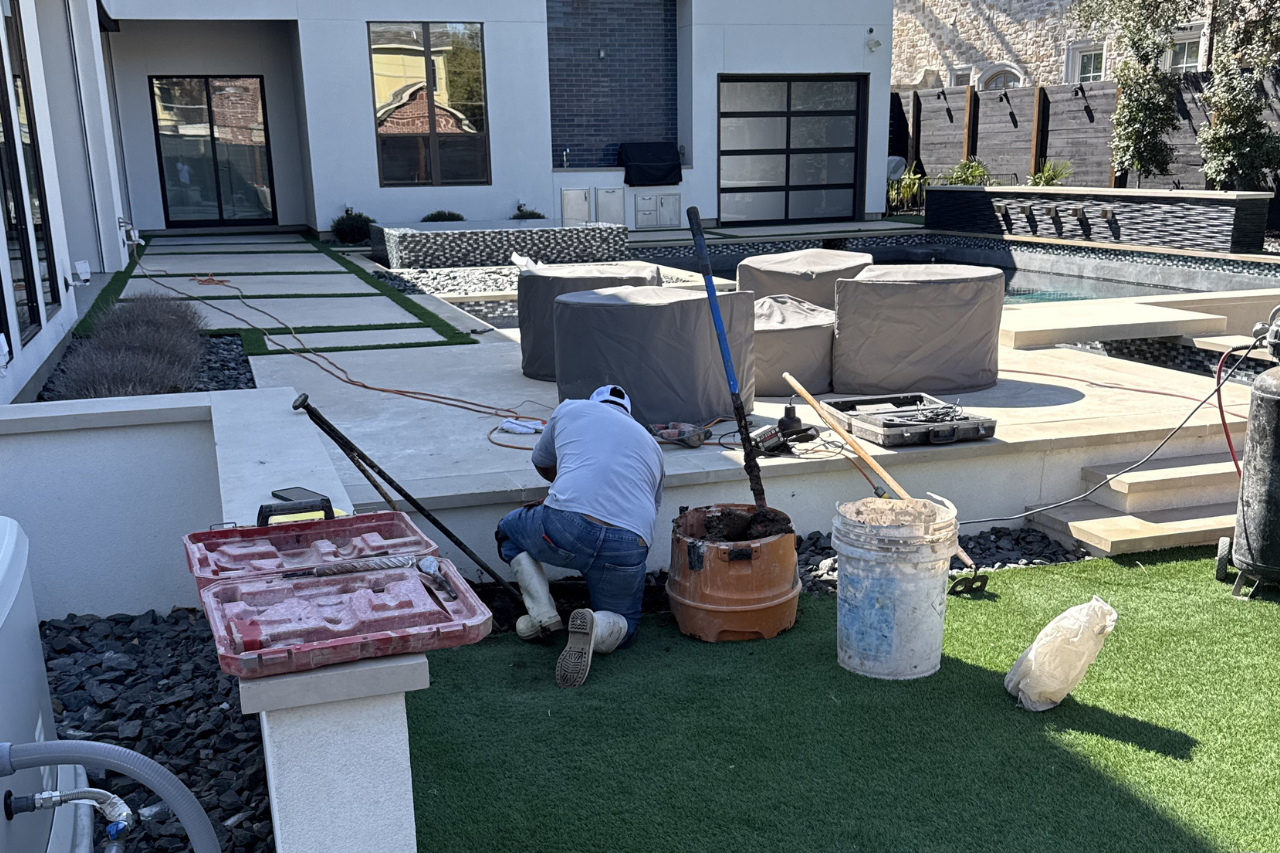
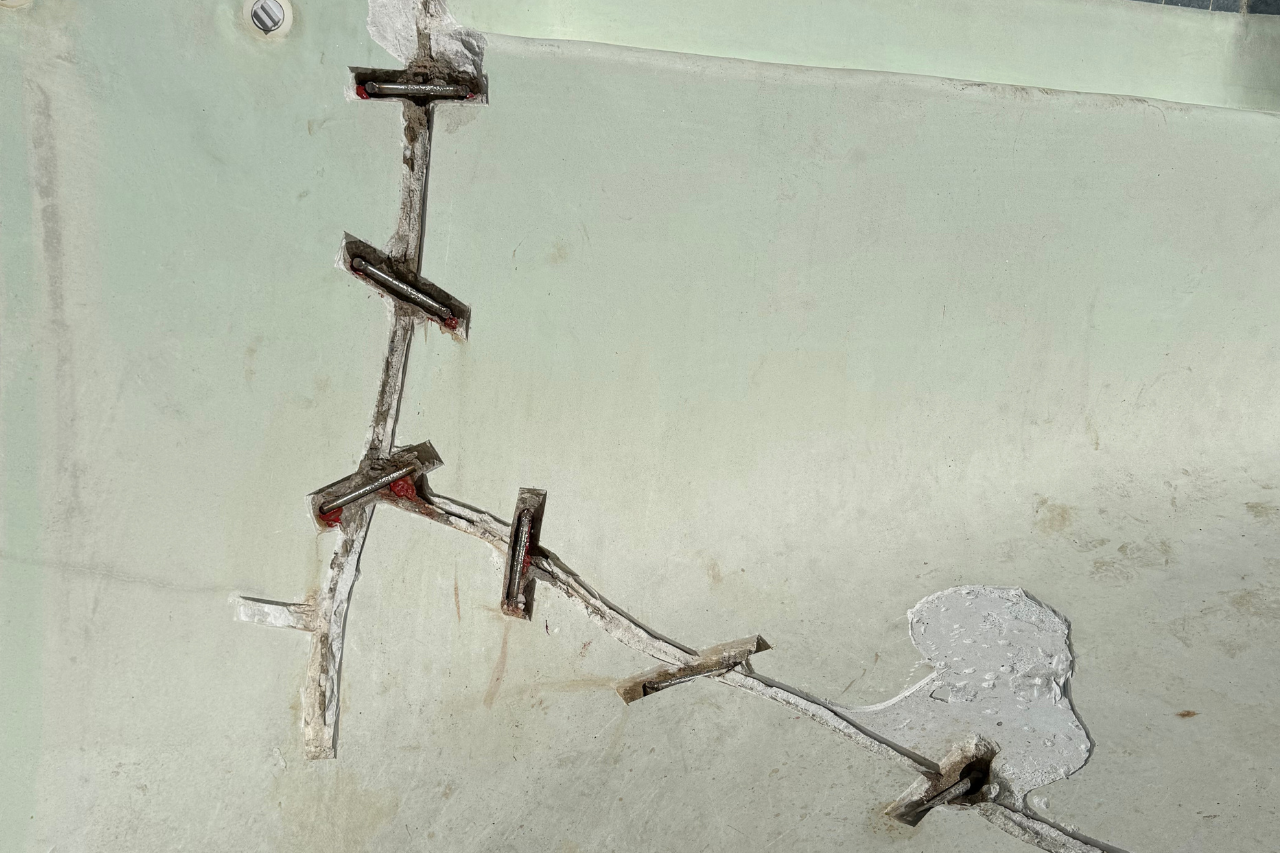
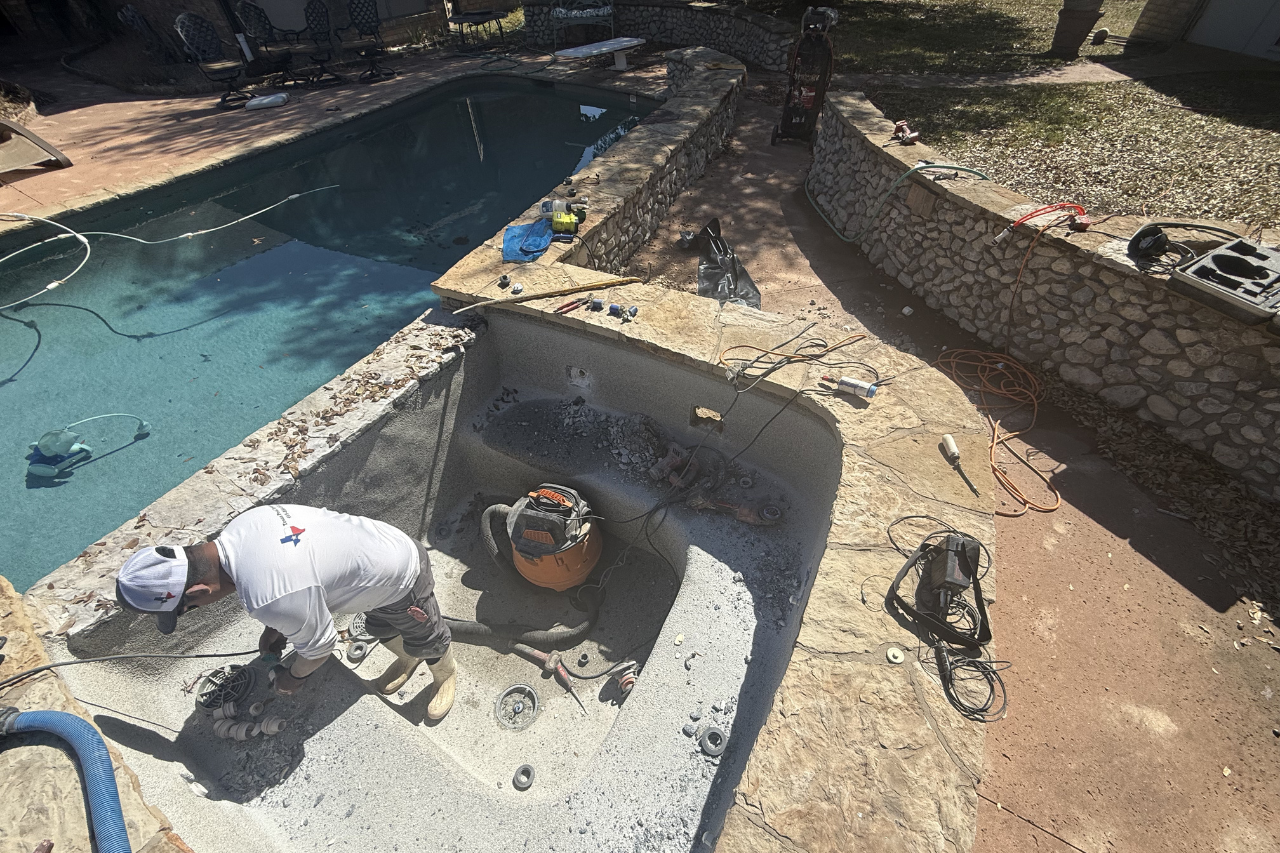
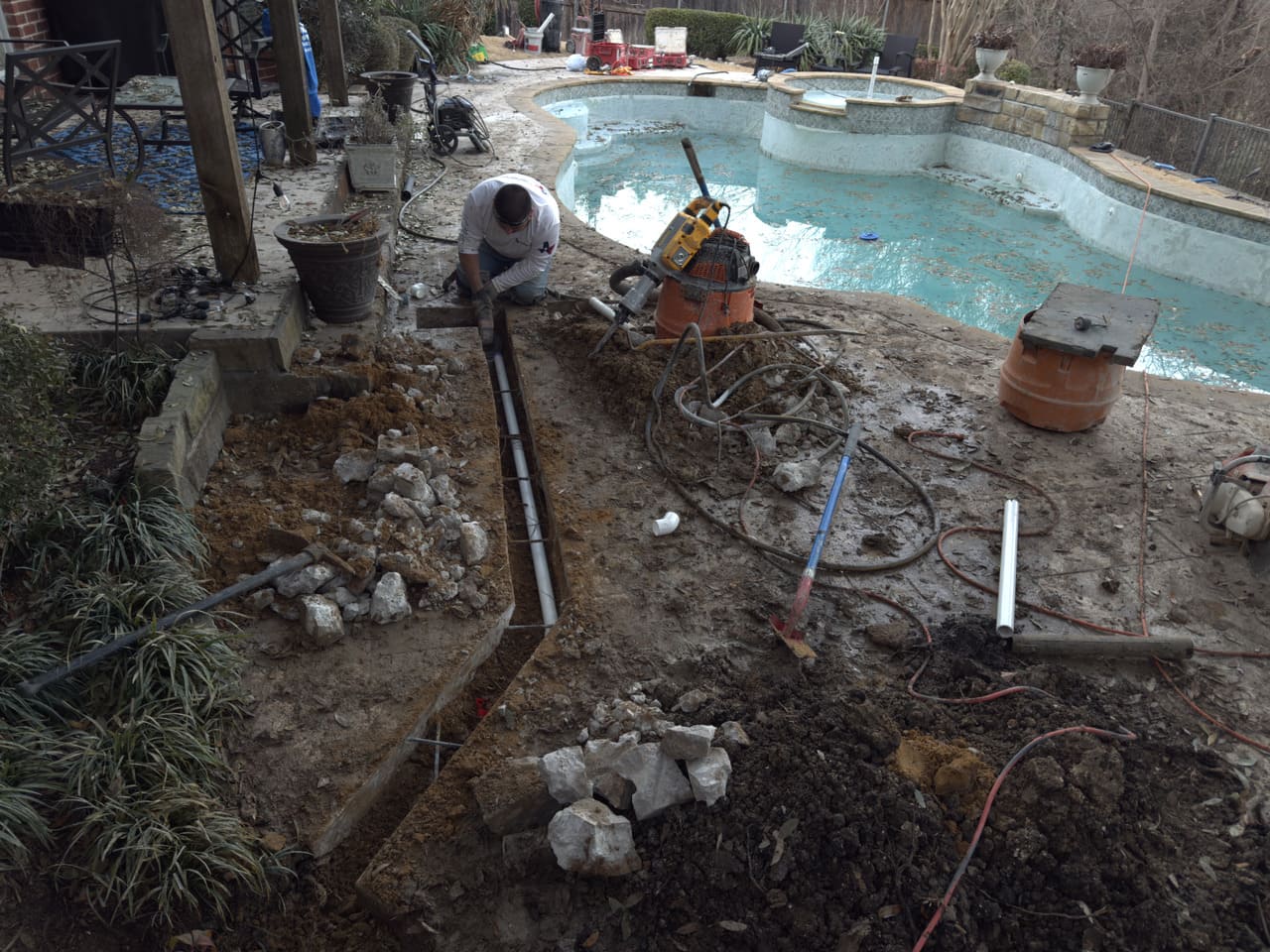
For an established Highland Park property, the repair process matters as much as the repair itself. We handle the full scope in-house with crews that respect the property:
Same-day service is available for many Highland Park jobs. Because Highland Park is close to our base of operations, we can typically respond quickly to urgent calls.
If you see any of these, schedule a leak detection inspection before the issue spreads to the deck, plumbing, or pool shell:
When you call, you reach experienced pool professionals directly, not a dispatcher or call center.
We serve homeowners throughout Highland Park and adjacent areas, including:
Highland Park proper, University Park, Armstrong Park, Connor Park, Bradfield, Bradfield Park, the Highland Park ISD area, the SMU border, and the Preston Hollow border. ZIP codes served include 75205, 75219, 75225, and surrounding 75230 and 75209 addresses where appropriate.
During peak summer heat, normal evaporation is around a quarter-inch of water loss per day. If your pool is losing more than that, needs frequent refilling, or shows wet spots around the pool or deck, there is most likely a leak. A bucket test can confirm before scheduling a professional inspection.
Pricing depends on the testing methods needed and pool complexity. Highland Park pools often involve more elaborate construction, raised spas, water features, decorative tile, which can extend the inspection. We provide all pricing upfront before work begins. Call (469) 888-9561 for a quote on your specific pool.
Yes. We use electronic detection, pressure testing, and dye testing without draining the pool in nearly all cases. Draining is only required when a structural repair below the waterline needs a dry working surface.
The most common leaks we find in older Highland Park pools are shell cracks at structural stress points, skimmer settling, copper-to-PVC transition leaks in aging plumbing, tile and coping joint failures, and leaks at spillway and raised spa connections. Older pools often have multiple leak points by the time they’re inspected.
Yes. Detection and repair are both handled in-house, plumbing, structural, and surface work, so there is no third-party coordination required after the inspection.
Most leak detection inspections in Highland Park take one to three hours depending on pool complexity. Estate pools with water features, raised spas, or multiple plumbing zones may take longer.
Yes. We work carefully around established landscaping and decorative hardscape. For underground pipe leaks, we use pinpoint excavation only at the leak point, never full deck removal, to minimize disruption.
If your Highland Park pool is losing water, an accurate diagnosis now prevents larger structural damage later. Texas Pool Leak Solutions provides professional leak detection and lasting repairs throughout Highland Park, University Park, and the surrounding area.
Call (469) 888-9561 or book an inspection online.