

Losing water? We locate Arlington swimming pool leaks accurately the first time and repair them the same day when possible.
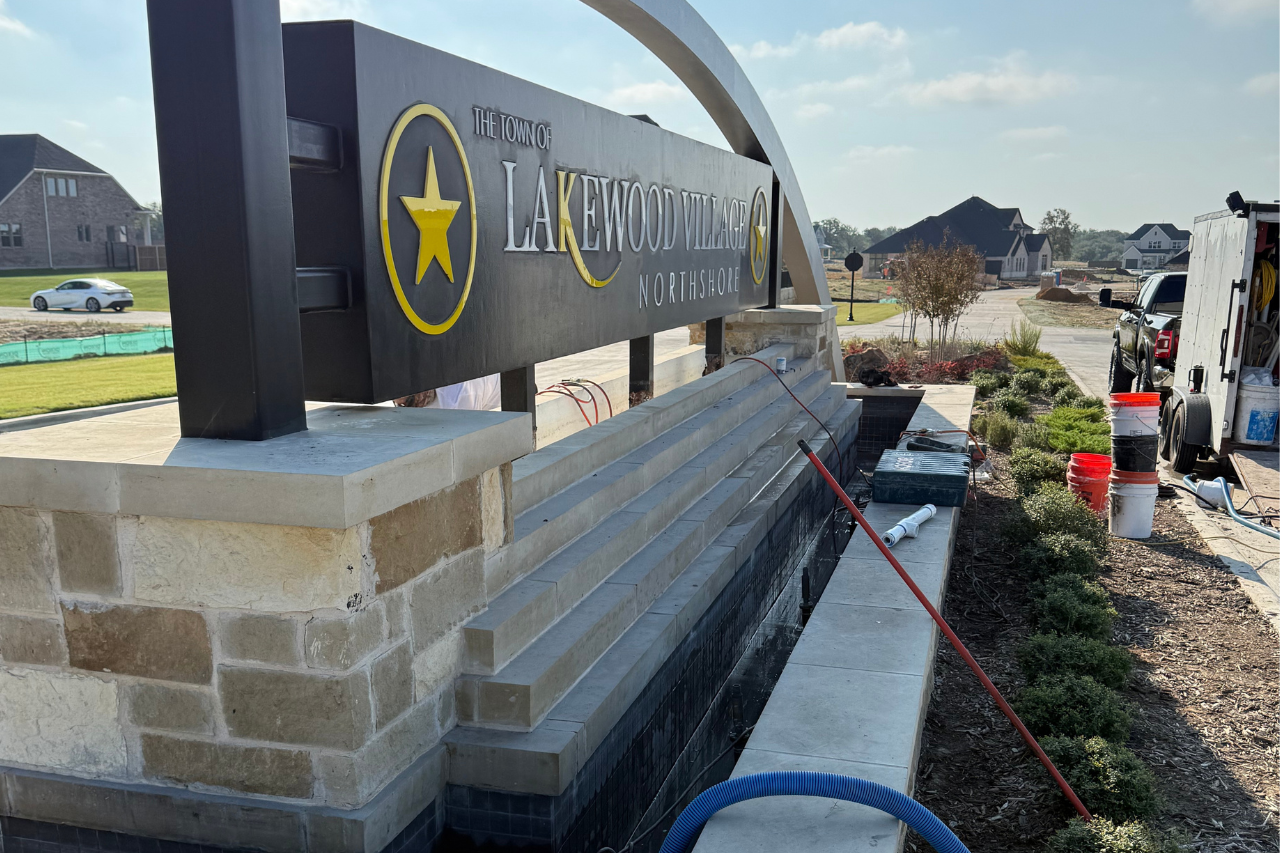
A pool losing water in Arlington can be easy to miss until the water bill arrives or wet spots appear in the yard. Between the city’s mix of established 1980s and ’90s neighborhoods and newer master-planned communities, the leak patterns we encounter in Arlington vary widely, and so do the diagnostic methods we use to find them.
Texas Pool Leak Solutions provides residential pool leak detection and repair throughout Arlington, TX. With over 30 years of combined experience across DFW, we locate leaks accurately the first time and repair them in-house, detection, plumbing, and structural work all handled by the same team. No call centers, no third-party inspectors, no waiting on a subcontractor to schedule the actual repair.
Call (469) 888-9561 to schedule pool leak detection in Arlington, or book online.
Every leak has a tell, but the tell isn’t always where the water is escaping. We use multiple methods together to pinpoint the exact source.
Electronic Leak Detection
Specialized listening equipment identifies pressure and sound changes inside the pool’s plumbing. This is the primary method for finding underground leaks in returns, suction lines, and main drain plumbing, none of which are visible from the surface.
Pool Pressure Testing
Each plumbing line is isolated and pressurized individually. By monitoring pressure loss, we identify which specific line is leaking and where along its run, before any deck work or excavation is recommended.
Dye Testing
A precise, non-destructive way to visually confirm leaks at cracks, fittings, skimmers, light niches, and tile lines. Once we’ve narrowed the area, dye testing confirms the exact leak point.
Structural and Shell Inspection
Hands-on inspection of the pool shell, bond beam, tile line, coping, and equipment-pad plumbing for cracks, separation, or settlement. Arlington’s mix of soil types, including shallow clay deposits in many neighborhoods, produces shell movement that shows up as cracks or tile separation in older pools.
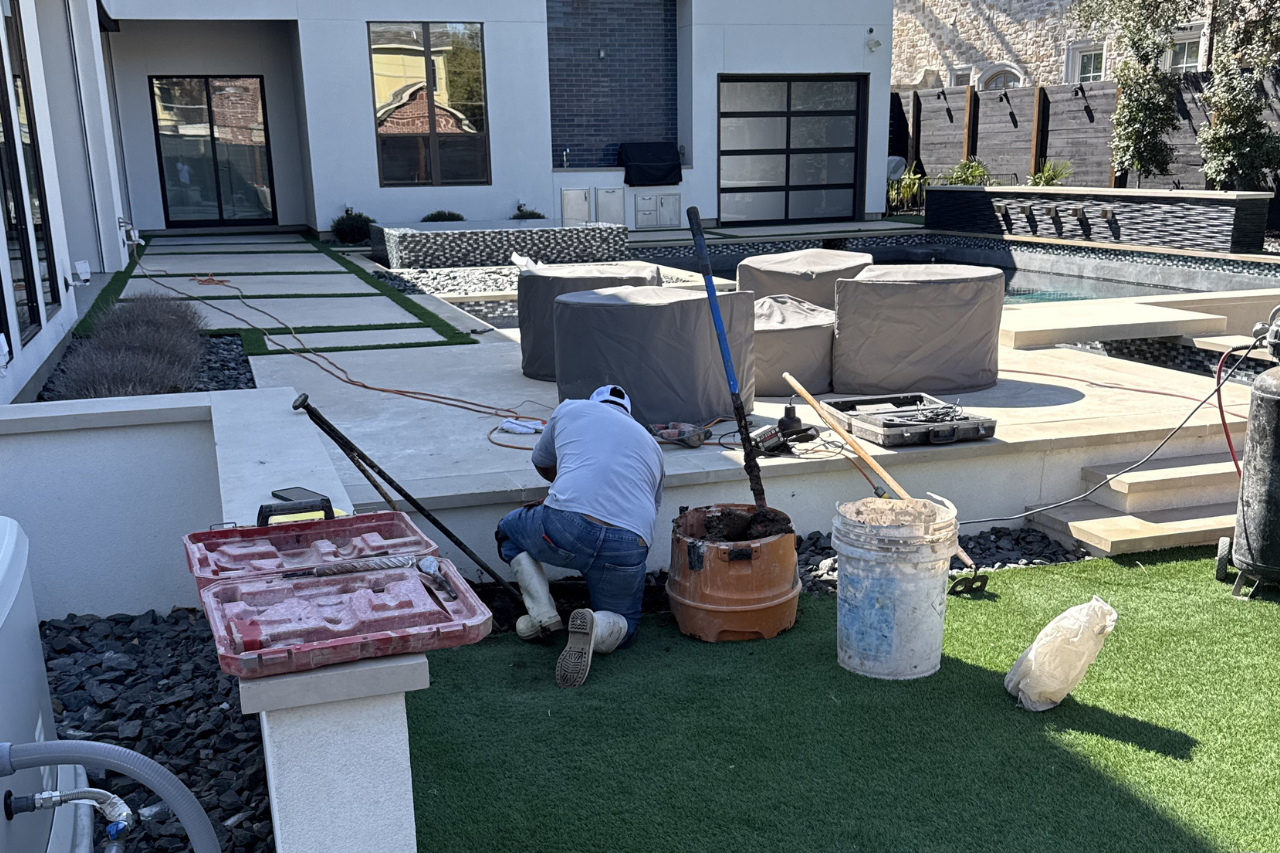
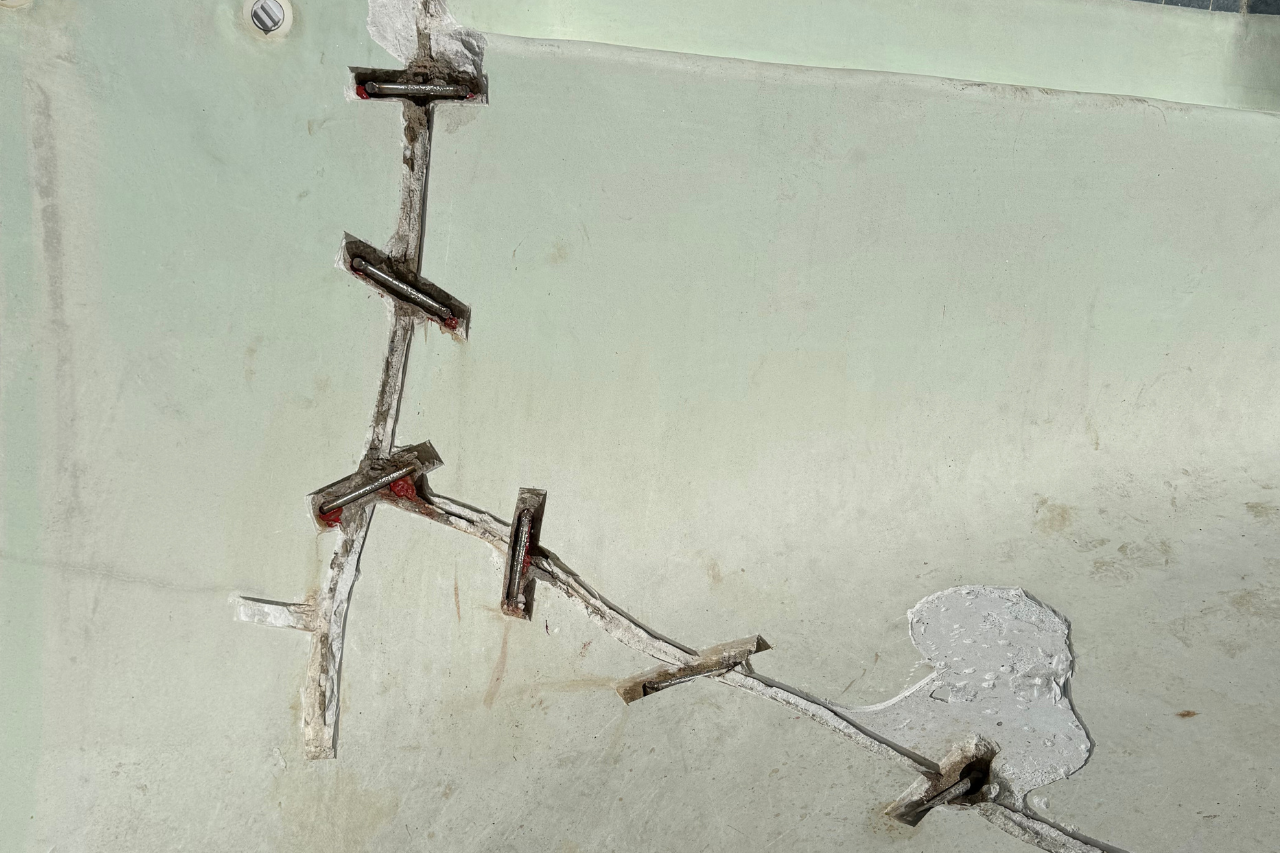
Detection is only valuable if the repair is done right. We complete leak repairs in-house so the same team that diagnosed the problem is the team that fixes it:
Same-day service is often available in Arlington when our schedule allows.
Arlington’s pool stock and geography produce a few recurring leak patterns.
Older pools in central and east Arlington.
Neighborhoods like Dalworthington Gardens, Pantego, and the areas around UT Arlington include many pools built in the late 1970s through the 1990s. After 25–40 years of seasonal soil movement and plaster wear, these pools commonly develop shell cracks, plumbing fatigue, and tile-line separation. We rarely find just one leak in this age range, usually it’s a combination.
Newer pools in north and northwest Arlington.
Master-planned communities like Viridian and the newer builds around the Entertainment District typically have well-installed plumbing, but Arlington’s clay-and-shale subsoil still produces settling around skimmer throats, return-line fittings, and bond beam areas within the first 5–10 years.
Pools in southwest Arlington and Mansfield-adjacent areas.
Lot grading and drainage variation around the Walnut Creek area can cause uneven hydrostatic pressure on pool shells, especially after heavy spring rains. This shows up as shell cracks and main drain leaks more often than in higher-elevation neighborhoods.
Hard-water scale and plaster wear.
Arlington water is moderately hard, and over years it contributes to plaster crazing and grout failure at the tile line. Once those failures extend below the waterline, they become active leak paths.
When you call, you speak directly with experienced pool professionals who will be on site, not a dispatcher.
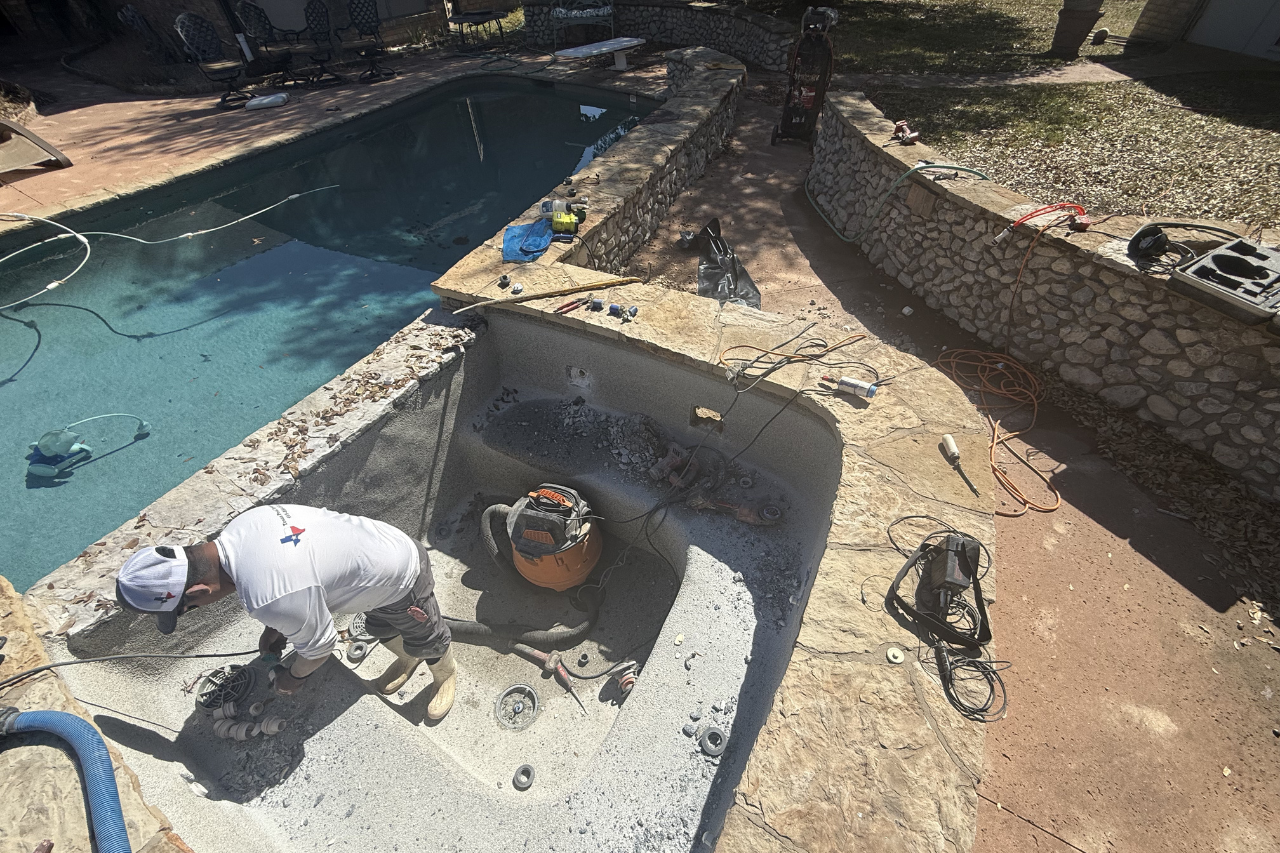
We serve homeowners throughout Arlington and surrounding communities, including:
Dalworthington Gardens, Pantego, Viridian, Forest Hills, Interlochen, Park Row, Lake Arlington, North Arlington, South Arlington, East Arlington, West Arlington, Southwest Arlington, the Entertainment District, the UT Arlington area, and surrounding ZIP codes 76001, 76002, 76006, 76010, 76011, 76012, 76013, 76014, 76015, 76016, 76017, 76018, and 76019.
In Arlington’s summer heat, normal evaporation is around a quarter-inch of water loss per day. If your pool is losing more than that, needs frequent refilling, or shows wet spots near the pool or deck, there is likely a leak. A bucket test gives a rough confirmation before scheduling professional detection.
Pricing depends on pool size and the testing methods needed. Most Arlington residential leak detection inspections fall within a standard service-call range. We provide pricing upfront before any work begins. Call (469) 888-9561 for a quote on your specific pool.
Yes. We use electronic detection, pressure testing, and dye testing without draining the pool in most cases. Draining is only needed when a structural repair below the waterline requires a dry working surface.
The most common leaks we see in Arlington are shell cracks driven by soil movement, skimmer body leaks, return and main drain plumbing leaks, and tile-line separation in older pools. Pools in central and east Arlington built in the 1980s and ’90s often present with several leaks at once.
Yes. We handle detection and repair in-house, plumbing, structural, and surface work, so there’s no need to coordinate with a separate repair company after diagnosis.
Most residential leak detection inspections in Arlington take one to three hours depending on pool size and the number of leaks. In many cases we can complete repairs the same day.
Yes. We locate underground pipe leaks with electronic detection and pressure testing, then repair them with targeted excavation only at the leak point, not full deck removal, to minimize cost and disruption.
If your Arlington pool is losing water, don’t let the damage spread to the deck, plumbing, or pool shell. Texas Pool Leak Solutions provides accurate leak detection and lasting repairs throughout Arlington and the surrounding DFW area.
Call (469) 888-9561 or book an inspection online.